Speaking Up, Spoken Down!
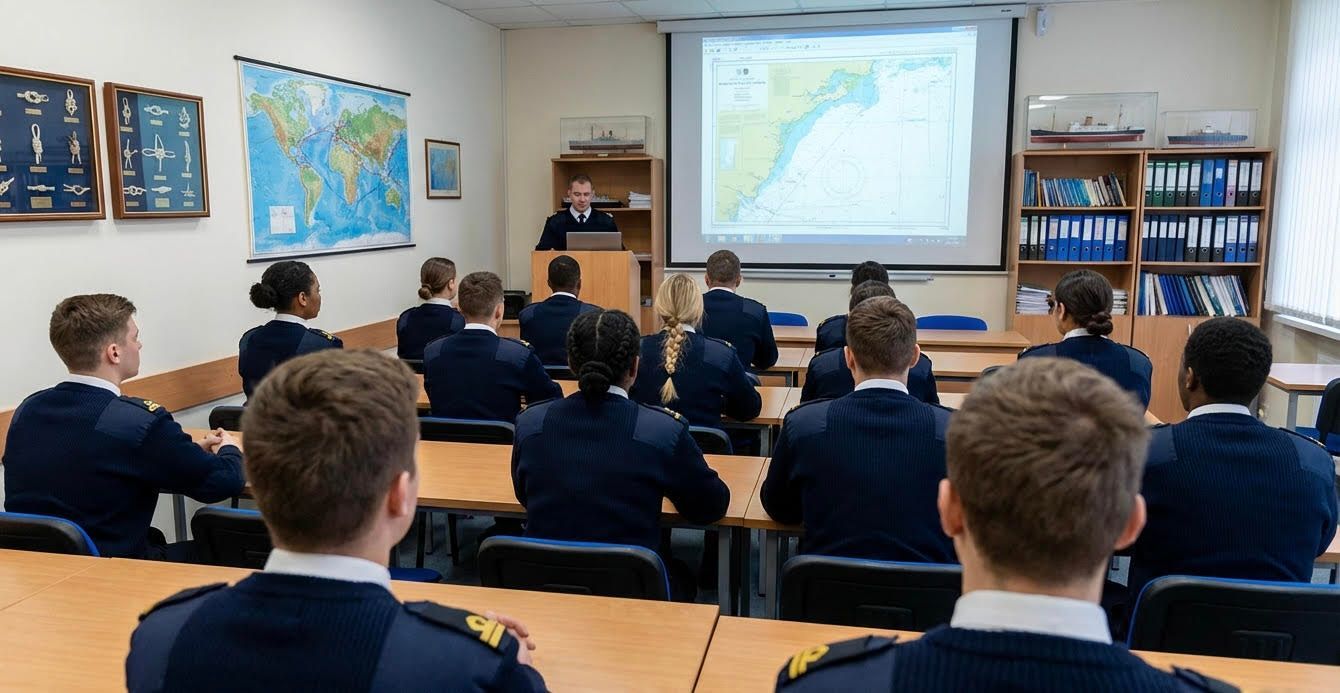
A generation of seafarers encouraged to speak up, entering environments where they are spoken down and a hierarchy that are not yet ready to hear them.
Across the maritime industry, a new generation of seafarers is stepping on board.
Millennials, now the largest adult cohort globally, are no longer the future workforce, they are the workforce and they are now joined by Gen Z entering the industry in increasing numbers. Often labelled as ‘lazy’ or ‘soft,’ these generations are, in reality, highly educated, digitally fluent, and driven by purpose. They value meaningful work, sustainability, fairness, and environments where they can contribute and grow. They are also more likely to question and challenge behaviours that previous generations may have accepted or ignored. So rather than asking whether they are ready for life at sea, perhaps the better question is: is the industry ready for them and truly equipped to support them?
Because, while we talk about progression, opportunity and standards, we must also consider what we are modelling. We tell young cadets they are entering a professional, safe and supportive environment - but are we equipping them, and those around them, with the correct tools to make that a reality?
The presence of charities, support networks and industry initiatives sends an important message: you are not alone. But support after the fact is only part of the picture. If this generation is motivated by purpose and improvement, then there is an opportunity and a responsibility, to match that energy with meaningful change in how safety, behaviour and accountability are understood at sea.
So where does that leave our newest entrants?
We are rightly beginning to equip cadets with updated training, clearer language and a better understanding of what constitutes bullying, sexual harassment and sexual assault. But can they rely on the hierarchy they are told to respect, mostly experienced seafarers who may never have received the same training, or fully understand these changes in wording, responsibility and response?
If a cadet finds the courage to say, “I feel like I’m being sexually harassed onboard,” or in the most serious cases, “I was sexually assaulted in my cabin” what happens next?
Scarily, the honest answer is, it depends.
Some will be met with professionalism, care and appropriate action. But others may still face minimisation, misunderstanding, or outdated attitudes where concerns are simply “noted” without action, dismissed as part of “life at sea,” or worse, met with language that shifts responsibility back onto the individual. Over time, these responses risk normalising harmful behaviours, allowing them to be accepted rather than challenged. These responses are not just inadequate, they are harmful.
Because bullying, sexual harassment and sexual assault are not cultural quirks of maritime life. They are serious safeguarding issues. They require informed, consistent and confident responses - not platitudes, not silence, and certainly not acceptance under the guise of tradition.
If we are serious about change,
then training cannot stop at the point of entry. It must extend across the entire workforce, including those in positions of authority. Without that, we risk creating a dangerous disconnect: a generation encouraged to speak up, entering environments that are not yet ready to hear them.
So, what can the industry do to address this?
The recent amendments to the STCW Convention that came into force at the start of this year are clear in both intent and expectation. They set out that seafarers must have a “basic knowledge and understanding of violence and harassment, including sexual harassment, bullying and sexual assault, and the continuum of harm.”
They go further - requiring an understanding of the consequences on victims, perpetrators, bystanders and overall safety, health and wellbeing, and recognising the role that power dynamics, isolation, fatigue, stress, and alcohol can play in contributing to harm at sea.
But here is the critical point: these are not entry-level risks. These are whole-industry risks.
If only cadets and new entrants are trained to this standard, we create a dangerous imbalance. We equip the most junior members of crew with the language, awareness and expectation to recognise harm, yet leave those in positions of authority without the same level of understanding or accountability. The Convention also requires the ability to identify, intervene, and report violence and harassment, alongside an understanding of trauma-informed response and appropriate support. These are not theoretical competencies. They are practical, real-time responsibilities, and they sit most heavily with those in leadership roles.
Without consistent training across all ranks, we risk situations where a cadet can clearly articulate an experience of sexual harassment or assault, but the person receiving that disclosure does not have the competence, confidence, or awareness to respond appropriately. That is not a training gap, this is a safeguarding failure.
How can we ensure this is industry wide?
Embedding this learning within the PSSR (Personal Safety and Social Responsibilities) course for all seafarers, not just new entrants, ensures that it becomes part of the industry’s baseline standard, not an optional or generational add-on. Because prevention and response to violence and harassment is not about seniority, it is about shared responsibility.
If the expectation is that seafarers can recognise harm, take action, intervene safely, report appropriately, and respond with a trauma-informed approach, then that expectation must apply equally to everyone on board - from Rating, Cadet to Captain.
Anything less risks creating a system where awareness exists, but protection does not and what a waste of the 2024 amendment that would be!
If we continue on the current path, we risk creating a two-tier system at sea: a generation trained to recognise abuse, and a hierarchy not fully equipped to respond to it. That is not progress, that’s exposure.
Because the reality is stark. When a seafarer reports sexual harassment or sexual assault, the response they receive in those first moments can shape everything that follows. Their safety, their mental health, their career, and whether they ever speak up again. If that response is dismissive, uninformed, or minimising, the harm does not stop at the incident, it is compounded by the very system meant to protect them.
So, the question is no longer whether training is needed. The question is: who are we prepared to leave untrained?
If the answer is anyone, particularly those in positions of power - then the IMO and ILO must accept the consequences of that decision.
And whether Flag States, responsible for implementing these Codes and Conventions, are willing to go further - to follow not just the minimum requirements, but a stronger moral compass. They have the authority, as seen in other areas of maritime regulation, to adopt higher standards.
The question is: will they choose to use it?
This is the moment for the maritime industry to act with intent. Not a partial change. Not an entry-level tick box. But a clear, unified standard where every seafarer, at every rank, is equipped to recognise, respond to, and prevent violence and harassment at sea.
And that standard cannot be achieved through one-off training. Learning doesn’t embed that way. The Rule of 7 tells us that people need repeated exposure - often five to seven times for information to truly stick. While simple facts may land quickly, complex issues involving behaviour, language and judgement require consistent reinforcement over time. Without that repetition, new learning is quickly lost.
Because safety is not selective. And neither is harm.
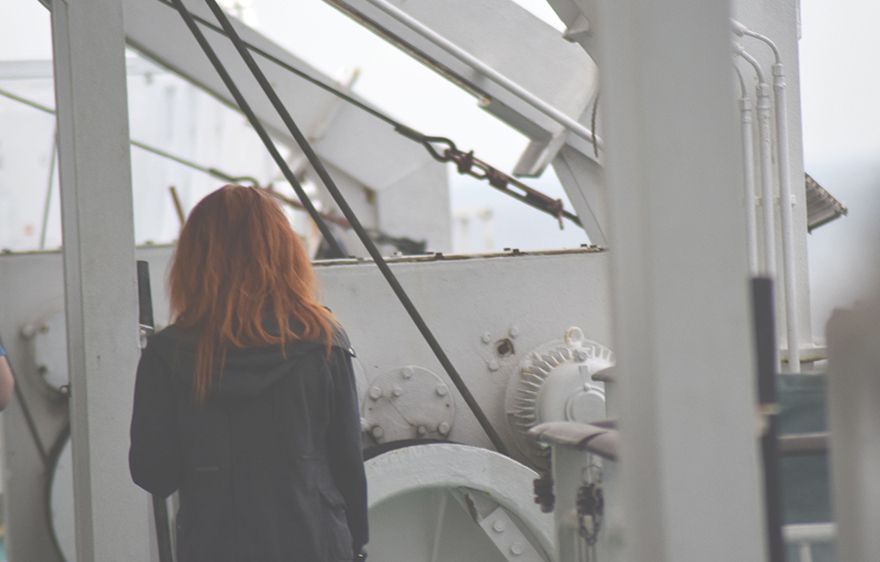
On behalf of the women who speak quietly On this International Day for Women in Maritime,
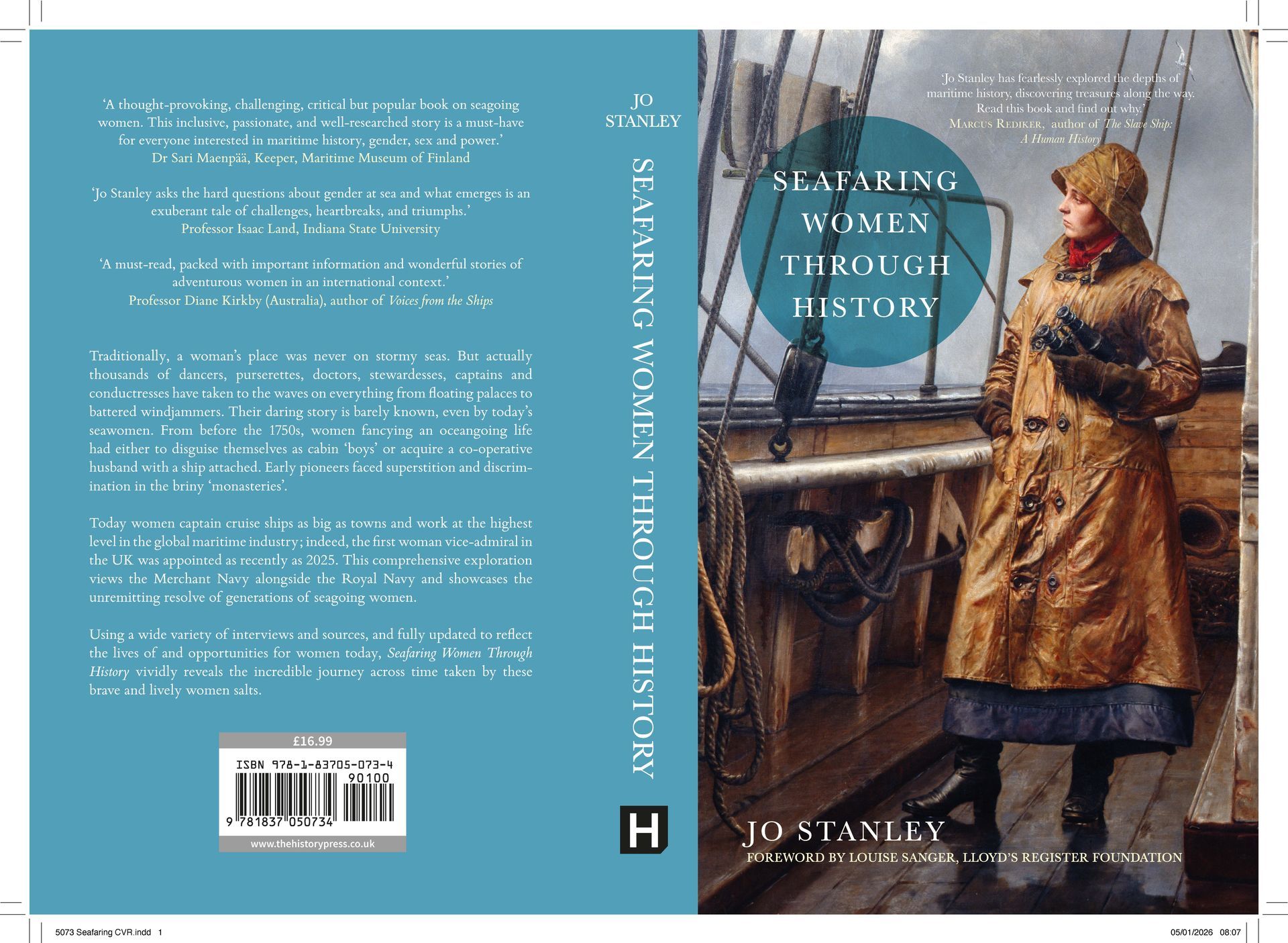
'I came to work as a stewardess, for my husband and my children … I had not come to be his mistress,’ Isabella McKenzie told a law court as she complained of abuses by her captain. Sounds familiar? Yet Isabella’s struggle had happened in 1860. And she had no Safer Waves to support her. It was 160 long years before Gisèle Pelicot in Avignon refused to be silent about multiple denigration, asserting ’shame must change sides’; before Virginia Guiffre’s revealed the systemic trafficking of minors to wider attention and started the Speak Out, Act, Reclaim organisation; and before stewardess Paige Bell’s 2005 Bahamas murder connected #MeToo to yacht industry malpractice as never before and spawned new protective initiatives. The sexual violence that Isabella alleged (I am legally obliged to use that formulation) seems to have been what is now recognised as usual: not a matter not of desire but of an entitled man’s repeated opportunist misuse of power over trapped, less powerful, women in an isolated place. Between Liverpool and the US, the setting was the Glasgow, a 1,962-ton emigrant ship. Isabella was the only woman working on board. But she knows Captain James Bates Thomson went to at least one woman passenger’s room too; Miss Mangan said she would tell her brother, a priest. Afterwards. And seemingly didn’t. Newspapers used euphemisms such as ‘take liberties’ and ‘violate her person’. So we can’t tell if Isabella was claiming rape or relentless verbal and physical harassment. ‘He said he had never had a stewardess but would yield to him….He said there was no use in this mock modesty … he was bound to have his desires’ in the end. The captain invaded her cabin, stripping back her bedclothes, as well as attacking her in his quarters. She’d begged ‘Do take me and throw me overboard, for it is preferable to this.’ He had even got the crew to hose her down on the deck. Later he tried to bribe her silence. Why had she not called out, or protested earlier, doubters asked. She explained her sense of responsibility. Aware of passengers nearby, ‘'I did not want the ladies to know that he treated me so, for the sake of the company'. Also, she ‘did not wish to … deprive him of a situation [job]’. Later, back home and angry, this Isle of Man breadwinner for four children and a sickly husband spoke out at Liverpool’s grand new Assizes. Going public - fruitlessly Isabella’s revelations of her abuse came about because Captain Thomson was seeking damages for wrongful dismissal. After she had told the company of his behaviour the Inman Line had removed him from command just as he was about to get a prestigious new ship and a 25% rise. He claimed her reports were just malicious revenge by an alcoholic prostitute whom he’d had sacked for drunkenness. But the court let him get away with it, awarding him £250 damages. He got his £500 p.a. job. There’s no evidence about whether Isabella sailed again, or how she recovered from what would now be seen as complex PTSD. Why wasn’t Isabella believed? Because she was lowly and female. Because juries were composed of elite males (for another 59 years). Because a cabin boy witness didn’t corroborate her story. Because some of her shipmates testified that she drank. They didn’t claim that she was often drunk, but that she did that thing that further confirmed Woman’s lack of any right to be respected: occasionally had a brandy. No-one asked about men’s alcohol consumption patterns on board. We can’t know how many other were in Isabella’s situation. Newspapers carry scores, but not hundreds, of reports of differing degrees of gendered male denigration of the women on ships. But in the period 1860-1879 alone I’ve already found eight published accounts. They include assault, one rape, and several reputationally destructive acts by spurned shipmates. Seawomen – and some husbands on their behalf – fought back. But winning was something else. ‘Extraordinary Case.- Alleged Immorality by a Captain’, Northern Daily Times, Liverpool, 26 December 1860, p3. Seawomen – and some husbands on their behalf – fought back. But winning was something else. How easy to overlook Newspaper stories of SASH are the latest part of my 40-year exploration of women’s maritime history. I’ve been gathering women’s oral testimony and officers’ reports, and detecting clues in company records. Since I finished updating the book that’s just out, I seem to increasingly find material about SASH that I hadn’t noticed enough before, included behaviour with enslaved women and convicts. Collecting antique ‘funny’ postcards has showed me how much cultural scaffolding there is for the idea that Jack Tars are ‘naturally’ charmingly naïve philanderers, and the boast that women love being the prey in this non-criminal ‘sport’. Initially I had the usual idea: ‘that perpetrator was just an odd bad apple’. Then I thought ‘What a lot of dodgy types these women encountered; why were so many on ships?’. It would have been more useful if I’d asked ‘What is it about sea travel that makes SASH so much more common and intense there?’ And finally I saw what I don’t want to see: that there is critical mass: SASH is and was the norm. As a #MeToo person reeling from the Pelicot assault stories I look back and face the everyday cultural climate in which sexual violence continues to not be recognised as part of ongoing hegemonic acceptance of masculine oppression. Manon Garcia has interestingly discussed this mix in her work on the Pelicot case. ‘How much has been going on for so long!’ I keep realising. Ordering crew to hose down Isabella like an animal seems such an indication of a masculine cultural assumption of the right to bully ‘the feminised’. he body content of your post goes here. To edit this text, click on it and delete this default text and start typing your own or paste your own from a different source.
Safer Waves supporting seafarers and the industry!
Toni Frost Safer Waves Operations Manager

Gordon – what are you up to? I have decided to take on a challenge that doesn’t have anything to do with the sea! I have volunteered to trek to the summit of Mt Kilimanjaro to support a charity very dear to my heart – Safer Waves. Why are you doing this? For a great many reasons…. I am not 21 years old anymore so as a bucket list item it was better to trek now than leave it too much longer haha. But seriously it was a way of trying to raise money during what for a great many is a global financial crisis. All charities suffer from a lack of donations when times are hard and Safer Waves needs the maritime community support. I am so happy that everyone rallied and the support I have received is absolutely fantastic. In the past, I had run 10K’s and marathons and raised money for my chosen local charities but never on this scale. To trek the highest mountain on the African continent at 5895m above sea level will be some endurance test and I think it has sparked everyone’s fascination as to why an ex-submariner and now merchant seafarer would want to put himself through such a challenge to be at that height. As challenges go, obviously the trek itself and the view will be awesome to undertake and no doubt many friends made along the way. But the primary aim is not about me or what I do but to highlight the topic of bullying, harassment and sexual assault. For many years this subject has remained taboo. People pretend it does not exist or ignore the sometimes unhealthy and unwelcome crew interactions at sea. “I do not sit on the fence and am an ally and proud to support those calling for an end to this stain on the maritime industry.” My aim with this trek and the global message I have been raising throughout the maritime community with my fundraising is simply that it must be acknowledged, it must end and together we can make that happen. I do not sit on the fence and am an ally and proud to support those calling for an end to this stain on the maritime industry. I hope it encourages others to become an ally and for those afflicted to feel supported and strong enough to report such behaviours. We often talk about messages we can shout from a mountaintop – you will literally be on a mountaintop, so what message would you shout regarding sexual abuse at sea? I would shout out ‘Do not sit on the fence’ – ‘Be that Ally’ – ‘We are Stronger Together’! Have you experienced or witnessed sexual harassment or gender discrimination onboard? “In my leadership position, I have the power to act and have done so.” Yes, both at sea and ashore. These events affected others and not me personally but as a shipmate, they obviously do affect me and who I am and what I stand for as a decent human being. In my leadership position, I have the power to act and have done so. As we know ships are an enclosed working environment and those who have the rank or power to intervene, support and report need to know what is happening/has happened AND need to act appropriately. This takes education, compassion but also courage. How do you find the courage to be an active bystander ? Being an active bystander means being aware of when someone’s behaviour is inappropriate or threatening and choosing to challenge it. I have the personality, character and experience that comes with maturity to do this. It doesn’t mean it is easy it just means I have the courage to do this. If you do not feel comfortable doing this directly, then get someone to help you such as a friend or someone in authority. On the Trek is there a sweepstake for total number of blisters ? I am sure there will be haha, maybe I could use this to raise even more funds ! How heavy is your backpack? What’s the grub going to be? I will be carrying personal equipment only as the Trek uses certified National Park guides and porters as part of sustainable trekking as it assists the local economy and provides training and fair wages to the locals. The Trek covers 5 ecological zones roughly every 1000m in altitude so it is like trekking from the equator to Antarctica in the short time of the 8-day trek on the Machame route. I am a seafarer so in reality, the grub could be anything and I would still eat it haha. Do you go with just one layer of sock, or do you do an inner and outer sock method to prevent blisters ? I use one pair of socks. Years back in the military when I would do expeditions and field craft we were taught blister control and foot hygiene. You are on your feet the greater part of the day so they will be my number one concern throughout the trek. Dry feet in top-quality socks and broken-in boots that fit and provide ankle support. How many miles in total is the trek and what’s the elevation gain? Over eight days we ascend to the 5895m summit and this is completed in daily chunks of approximately 7-8km. To alleviate altitude sickness we ascend gradually and will actually descend slightly at night to camp. What are you most anxious about? I would say altitude sickness. It does not matter if you are an athlete or have average fitness it will be altitude sickness that will prevent you from achieving your aims. There is the same percentage of oxygen at altitude but because of the increase in pressure less oxygen enters your lungs with each breath. That is why it is a trek and not a race, more endurance really as side effects of altitude sickness are headaches, shortness of breath and fatigue. What will you do when you get back down from the mountain? Shower haha that will probably be a necessity! Then it will be to download my photos and send messages out to my sponsors and the supporting maritime community. What will you do when you get back home? Thank my wife for tolerating me … not only my life as a seafarer but putting up with my mad fundraising ideas. After that I will enjoy hearing what the Safer Waves guys manage to achieve with the donations. I am sure it will be for research, keeping up the great work with the website and email support service and I hope means you can reach even more seafarers and be able to meet where the need is great in as many different ways possible.
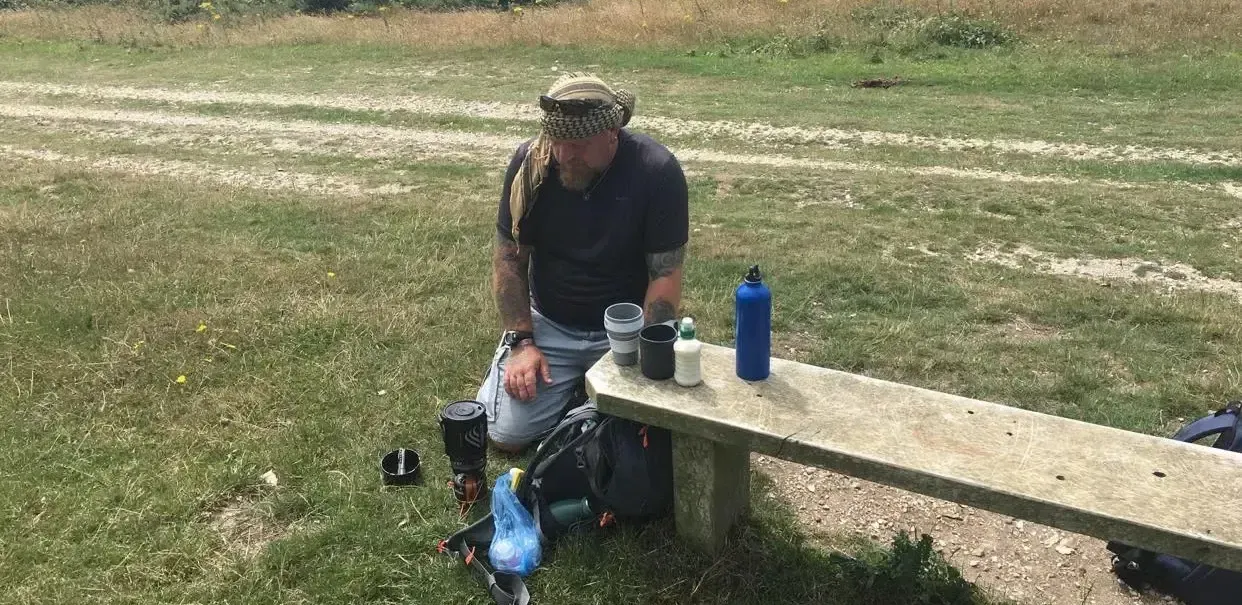
A few months ago, Mark Udle got in touch with us and said that he would like to fundraise for Safer Waves. Mark is an outdoor enthusiast, who is passionate about inspiring and encouraging people to get outdoors, for the benefit of their physical and mental health. We were very excited about the prospect of our first fundraiser, and Mark soon fine-tuned his plan. The challenge he decided on is 80 miles of hiking over 4 days, along the steep cliffs of the Jurassic Coast. Mark wanted to involve as many of his colleagues as possible, and set about inviting them to walk alongside him, and to help him with the logistics. So far Mark has completed 260km worth of training with his colleagues and his family.
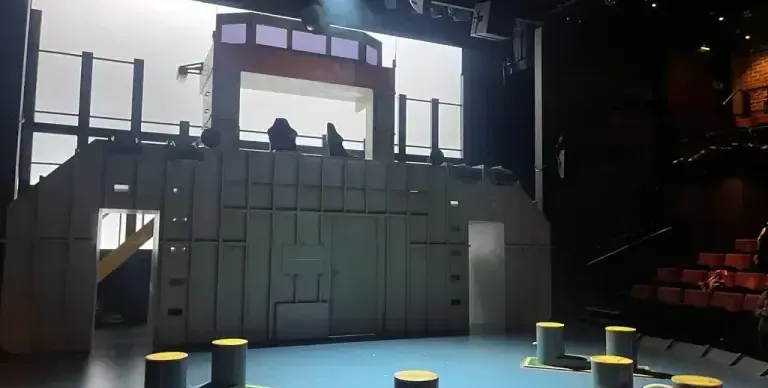
Once reviews started to come out about a play up in Liverpool based on a female British seafarer, Corrina, and her experiences onboard, I was intrigued and curious to go watch. I’m a person who has not even watched Captain Phillips, Deepwater Horizon or other movies based on our industry, but the plot sparked my curiosity to the point where I found myself on a train heading up to Liverpool to watch the final show.